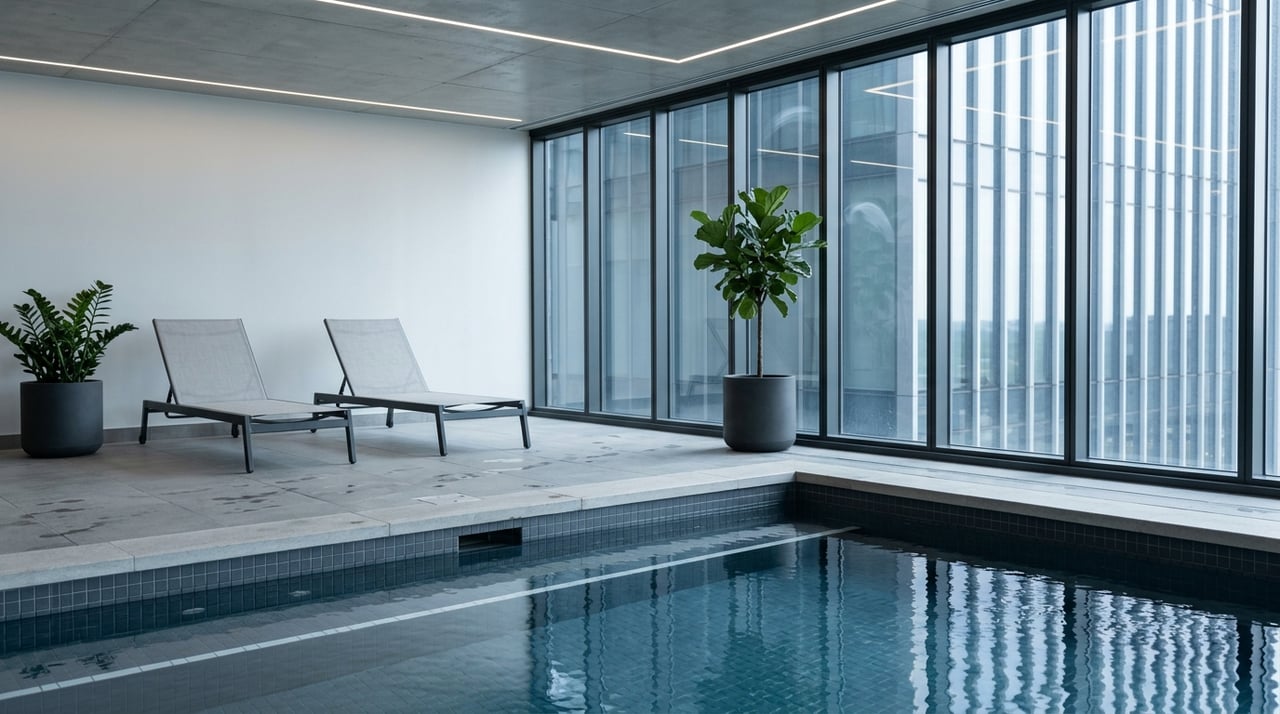
Buying a luxury high-rise in Chicago’s 60601 zip code is rarely just about the unit itself. In many downtown towers, the real comparison happens at the building level, where amenities, service, and monthly assessments can shape both your day-to-day experience and your long-term resale position. If you want to look past the glossy brochure and evaluate what truly matters, this guide will help you compare amenities with more clarity and confidence. Let’s dive in.
Why Amenities Matter in 60601
In Downtown Chicago, amenity quality can influence both carrying costs and marketability. That matters in a market where buyers are often weighing one full-service tower against another, not choosing between very different neighborhood lifestyles.
Market conditions also reinforce that point. Realtor.com characterized Downtown Chicago as a seller’s market in May 2026, with about 1,600 active listings, a median listing price of $499,000, and a 99% sale-to-list ratio. Chicago REALTORS also reported that highly amenitized newer properties have been outperforming older inventory, with Downtown Chicago and the North Lakefront leading in dollar volume and price per unit.
Focus on How You’ll Actually Live
The best amenity package is not always the flashiest one. It is the one you will use often enough to justify the monthly cost and one that will still make sense to a future buyer when it is time to sell.
Buyer preferences have moved toward shared convenience and flexible common spaces. Zillow’s Consumer Housing Trends Report found that the share of buyers who rated shared community amenities as very or extremely important rose from 29% in 2018 to 43% in 2023. Interest in pools and hot tubs also increased, rising from 24% to 40% over the same period.
That means you should evaluate amenities through a practical lens. A coworking lounge, package room, fitness center, roof deck, or 24-hour door staff may offer more everyday value than a feature that looks impressive on a tour but rarely gets used.
Amenities Buyers Compare Most
In downtown Chicago high-rises, buyers often compare a familiar group of features:
- 24-hour door staff or security
- On-site management or engineering staff
- Fitness centers
- Indoor pools
- Rooftop decks or terraces
- Community rooms or lounges
- Business centers or coworking areas
- Package receiving and delivery support
- Valet, attached, or deeded parking
- Storage options
- Pet amenities such as dog runs or dog spas
Representative downtown buildings such as 1000 Lake Shore Plaza and One Museum Park West market many of these features as part of the full-service lifestyle. The important step for you is to look past the list and judge how usable, maintained, and financially sustainable each one really is.
Separate Everyday Value From Showpiece Value
Some amenities improve your routine every week. Others are more about image than function. When you tour a building, try to sort features into those two categories.
Service-oriented amenities usually deliver repeat value. Concierge support, package handling, staffed entry, on-site management, and reliable parking solve recurring problems and tend to stay relevant over time.
Flexible shared spaces can also carry strong appeal. Research on high-end condominium resales found that social and shared-use amenities such as meeting rooms, event spaces, and courtyards were associated with stronger resale outcomes. While that study was based in central Tokyo and should not be treated as a Chicago pricing rule, the broader lesson is useful: spaces that many owners can use regularly often age better than niche features.
Ask Yourself Two Core Questions
As you compare towers, keep coming back to these questions:
- Will I use this amenity often enough to justify the assessment?
- Will the association be able to maintain this amenity without surprise costs?
Those two questions can help you cut through a lot of marketing language.
Compare Total Carrying Cost, Not Just Price
One of the biggest mistakes buyers make is comparing purchase prices without fully comparing monthly cost. In a luxury high-rise, the amenity package and what the assessment covers can dramatically change the true cost of ownership.
Some Chicago buildings include service items or utilities in the monthly assessment, such as heat, air conditioning, water, gas, internet, cable, common insurance, exterior maintenance, snow removal, or pool access. A building with a higher monthly assessment may offer better value if those costs are bundled and predictable.
On the other hand, a lower-fee building may not be the bargain it first appears to be. If amenities are expensive to operate or major systems are aging, you may face higher future costs through reserve increases or special assessments.
What to Review in the Monthly Assessment
Ask for a clear breakdown of what the monthly assessment covers, including:
- Utilities
- Insurance categories included by the association
- Staffing and management
- Package handling
- Parking access
- Storage access
- Amenity use fees or included access
- Exterior maintenance and common-area upkeep
This is often where tower-to-tower differences become most important.
Review the Building’s Financial Health
Amenities are only as strong as the association behind them. In Illinois, condo ownership is tied closely to the association’s budget, reserve planning, and meeting process.
The Illinois Condominium Property Act requires unit owners to receive the proposed annual budget at least 25 days before adoption. The Illinois unit-owner handbook also explains that assessments cover operating expenses, reserve assessments for long-term maintenance, and special assessments. For you as a buyer, that means the amenity story is always connected to governance and financial discipline.
A beautiful pool, roof deck, or fitness center is less reassuring if the building does not appear prepared to maintain it. In high-rises, reserve planning matters because expensive systems and common elements need regular updates over time.
Key Documents to Request
Before you get comfortable with an amenity-rich building, ask to review:
- The latest annual budget
- A reserve study or reserve analysis, if available
- Recent board meeting minutes
- Any notice of planned special assessments
- Information on recent or upcoming capital projects
These are normal due-diligence items, not unusual requests.
Understand Which Systems Drive Cost
Luxury towers have more moving parts than many buyers realize. Beyond visible amenities, the building may also be funding and maintaining elevators, boilers, access systems, garage gates, trash compactors, and roof or terrace infrastructure.
Reserve-study guidance treats these as major capital components, and they can have a big effect on future costs. If a building has excellent amenities but deferred maintenance behind the scenes, the monthly assessment may not tell the full story.
A high-rise benchmark from FirstService Residential also shows that pool, amenities, and recreation appear as their own expense category, alongside property team, elevators, utilities, and reserves. That is why two seemingly similar buildings can carry very different ownership costs.
Tour Amenities With a Checklist
When you visit a building, try to evaluate amenities as an owner rather than a guest. The goal is to understand real usability, not just first impressions.
Questions to Ask on a Tour
- What are the operating hours for the fitness room, pool, roof deck, lounge, or coworking room?
- Are reservations required for any spaces?
- How often are these areas cleaned or closed for maintenance?
- When were major systems last replaced or updated?
- Which amenities do current residents use most?
- Which amenities have the highest ongoing cost per owner?
- What are the guest policies?
- What are the pet rules?
- How do move-in and move-out logistics work?
- How do parking and storage access work day to day?
These details may sound small, but they often shape how valuable an amenity feels once you actually live there.
Be Careful With Pools and Specialty Features
A pool still helps marketability, but it should not get automatic credit. Realtor.com’s 2025 pool research found that buyers are becoming more selective and less willing to pay the kind of premium pools once commanded.
In a condo tower, that means you should look at more than the fact that a pool exists. Consider whether it is well-located, well-maintained, adequately staffed, and realistic for the association to support over time.
The same logic applies to other specialty amenities. If a feature sounds exciting but has limited hours, frequent closures, low resident use, or high maintenance demands, it may add less value than a simpler amenity with broad appeal.
What Usually Holds Up Best at Resale
In downtown Chicago, the strongest amenity packages tend to be broad, durable, and easy to explain. Future buyers often respond well to amenities that support convenience, wellness, social use, and everyday function.
That usually means features like:
- Fitness spaces
- Outdoor terraces or sundecks
- Flexible lounges or meeting rooms
- Reliable package handling
- Door staff or concierge-style service
- Practical parking and storage solutions
These are easier for the next buyer to understand and easier for you to judge in terms of real-life value.
A Smarter Way to Compare Downtown Towers
If you are buying in 60601, think of amenities as part lifestyle decision and part financial analysis. A polished brochure may tell you what exists, but it will not tell you whether those features are heavily used, properly funded, or likely to support resale.
The strongest building choices are usually the ones where the amenities feel useful, the monthly assessment is understandable, and the association appears disciplined about maintenance and reserves. That combination tends to create a better ownership experience and a clearer resale story.
If you want help comparing downtown Chicago high-rises with a more strategic lens, Niko Apostal and the NiKo Collaborative team can help you evaluate not just the unit, but the building behind it.
FAQs
What amenities matter most in a downtown Chicago luxury high-rise?
- The most valuable amenities are often the ones you can use regularly, such as fitness centers, roof decks, flexible social spaces, package handling, parking, storage, and door staff or concierge-style services.
How should you compare condo assessments in 60601 buildings?
- You should compare what the monthly assessment actually covers, including utilities, staffing, insurance, parking, storage, and amenity access, rather than judging the fee amount alone.
Why do reserve studies matter in Chicago high-rise buildings?
- Reserve studies help show whether an association is planning for major repair and replacement costs for building components such as elevators, boilers, access systems, and garage infrastructure.
Are pools still a strong selling point in downtown condo towers?
- Pools can still help marketability, but buyers are more selective now, so you should evaluate condition, maintenance, staffing, and long-term cost instead of assuming a pool always adds major value.
What documents should you request before buying a luxury condo in Chicago?
- You should ask for the latest annual budget, reserve study or reserve analysis, recent board minutes, and any information about planned special assessments or major capital projects.
How can you tell if a high-rise amenity is worth the cost?
- A useful test is whether you expect to use the amenity often enough to justify the assessment and whether the association appears able to maintain it without unexpected future costs.