If you want a Chicago investment property that can balance rental demand, long-term flexibility, and future resale options, Bucktown should be on your radar. This pocket on the North Side gives you access to a tenant-heavy market, classic small multifamily building stock, and the kind of neighborhood convenience that matters over a long hold. If you are weighing a two-flat, three-flat, or four-unit building here, the real opportunity is knowing what to value and what to underwrite carefully. Let’s dive in.
Why Bucktown stands out
Bucktown is often described as sitting between and alongside nearby submarkets that buyers already know well, including West Town, Logan Square, and Wicker Park. In practice, that matters because investment demand and resale behavior in Bucktown often move with those surrounding areas rather than as a completely separate district.
For long-term investors, the housing mix nearby is a big part of the story. CMAP data for June 2026 shows that Logan Square has 16.8% of housing units in 2-unit buildings and 27.6% in 3- or 4-unit buildings. West Town shows 10.9% in 2-unit buildings and 32.1% in 3- or 4-unit buildings.
That tells you something important. In Bucktown, 2 to 4 unit properties are not an oddball asset class. They are part of the broader housing fabric, which supports both leasing demand and resale demand from future investors or owner-occupants.
Bucktown supports steady rental demand
The nearby renter base is strong. Logan Square is 61.4% renter-occupied, while West Town is 58.1% renter-occupied, according to CMAP. For a long-term owner, that suggests you are buying into an area with real leasing depth rather than hoping demand appears later.
Vacancy data adds another useful layer. Logan Square’s vacancy rate is 8.9%, and West Town’s is 5.9%. Those numbers do not guarantee performance on a specific building, but they do show that Bucktown sits near active tenant markets rather than a thin renter pool.
Location convenience also helps these buildings compete. The 606 is a 2.7-mile elevated trail that connects four neighborhood parks, and the Damen Blue Line station at 1558 N. Damen Ave. links riders to CTA bus routes 50, 56, and 72. For many tenants, that mix of transit and neighborhood access is a real quality-of-life factor.
The building stock is old, useful, and full of character
If you are shopping Bucktown multifamily, you should expect vintage buildings. Chicago’s two-flats, four-flats, and six-flats make up more than 30% of the city’s housing stock, and most were built between 1900 and 1920, according to the Chicago Architecture Center. The Institute for Housing Studies adds that Chicago’s 2 to 4 unit buildings are generally among the oldest in a community and have a median age of 108 years citywide.
The nearby submarkets back that up. Logan Square has a median year built of 1932, and 58.9% of its housing units were built before 1940. West Town is somewhat newer overall, but 40.0% of its housing units were still built before 1940.
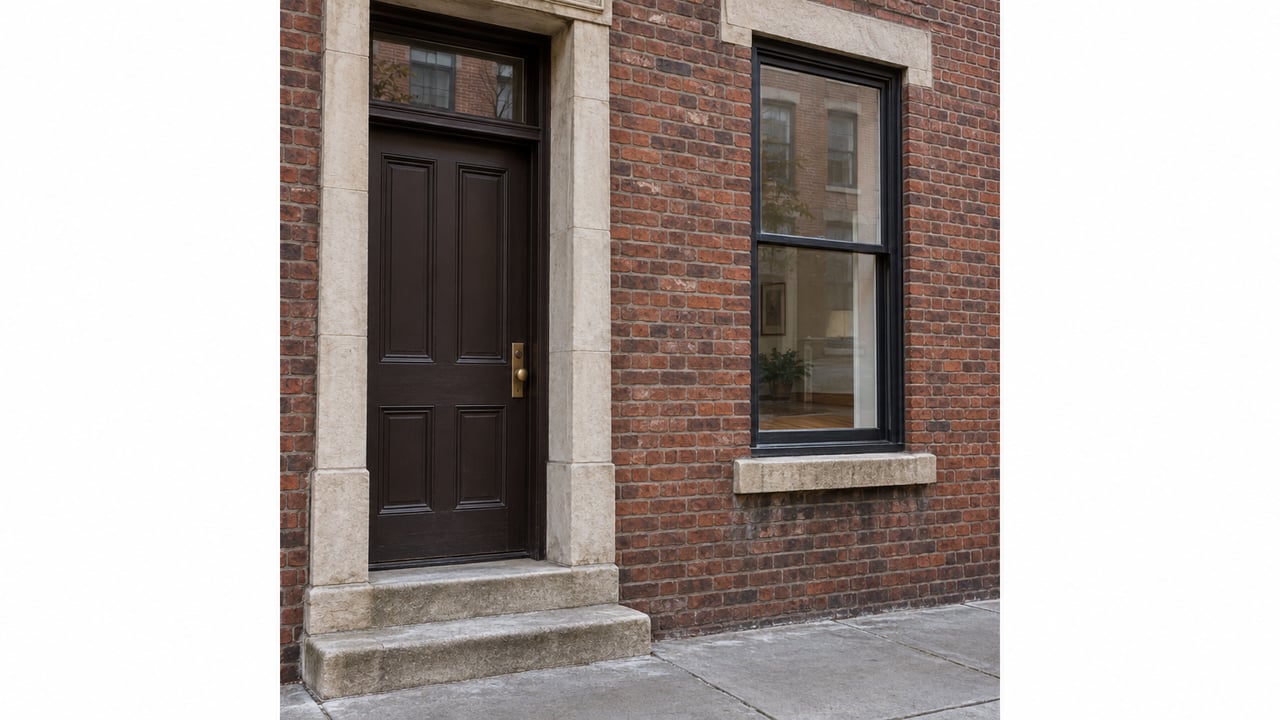
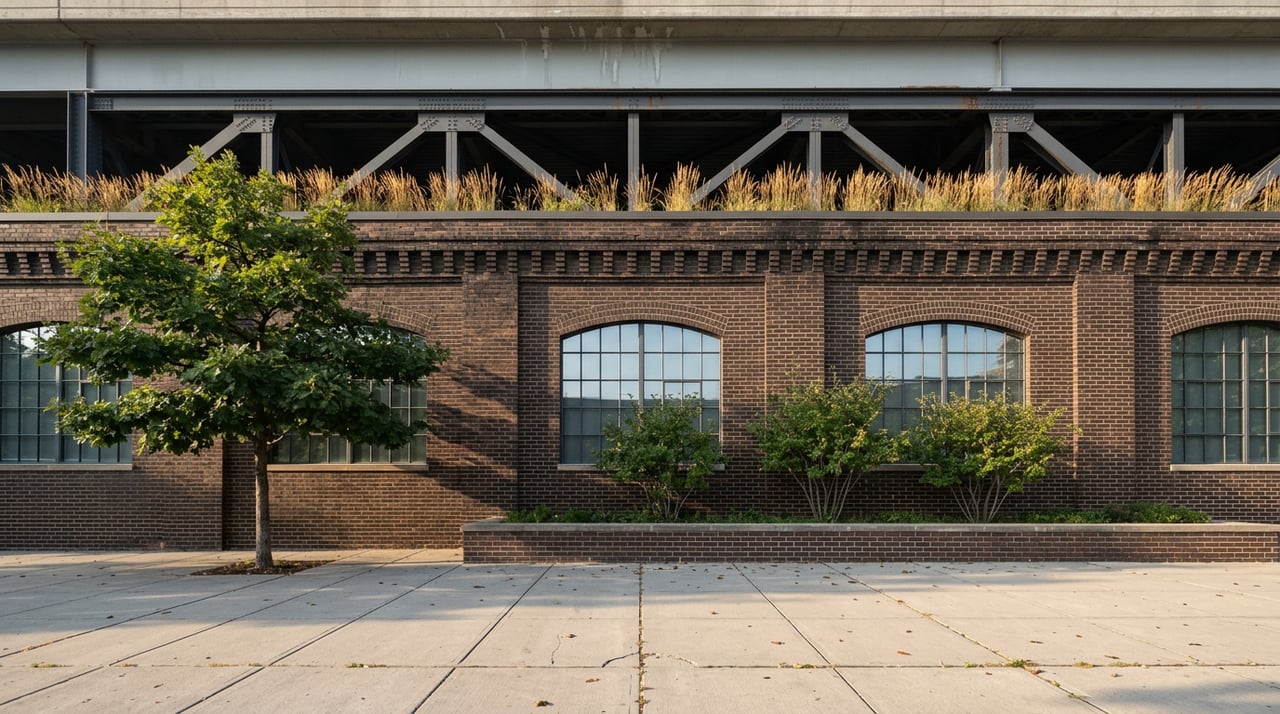
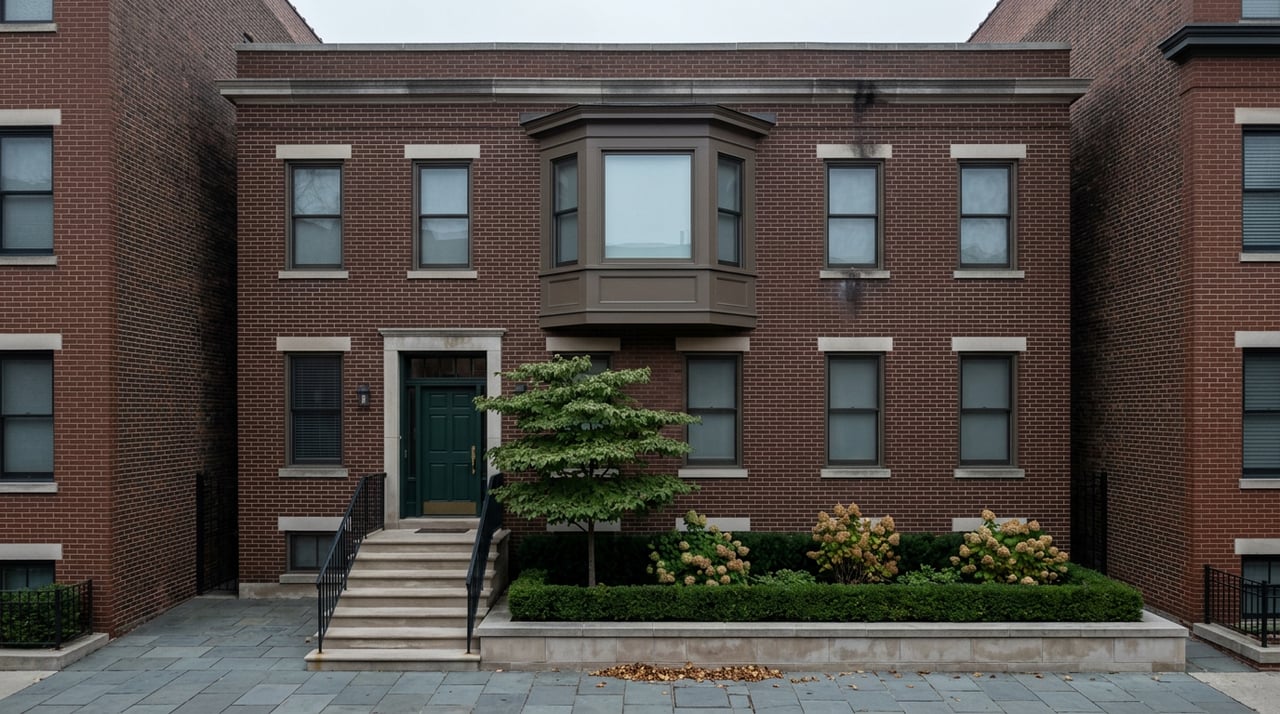
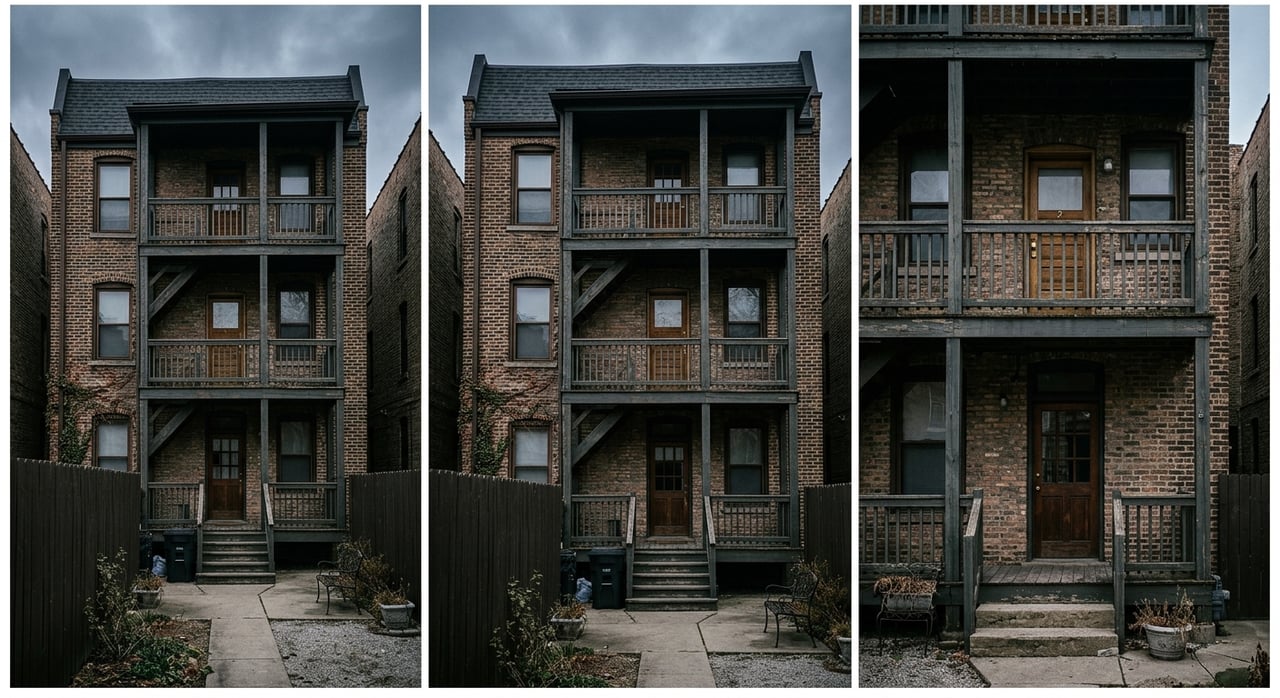
On the ground, that usually means you will see classic brick two-flats, older frame or masonry hybrids, and newer infill on the same block. That variety can be appealing, but it also means no two buildings should be underwritten the same way.
What makes a good long-term buy
The best Bucktown 2 to 4 unit investments often have one thing in common: solid bones with functional layouts. A building does not need to be fully updated to make sense, but it should give you a clear path to improvement without forcing a full rebuild.
That matters because the layout in this asset class can be a real strength. The Institute for Housing Studies found that nearly 40% of rental units in 2 to 4 unit buildings have three or more bedrooms. For investors, that can support demand from renters who need more than a short-term crash pad and want true living space.
That same layout flexibility can also help on resale. A larger unit mix may appeal not only to renters, but also to future house-hackers or owner-occupants who want to live in one unit and lease the others.
Renovation strategy matters more than cosmetic appeal
In Bucktown, value-add usually works best when you focus on systems and durability first. In older small multifamily buildings, the main cost drivers are often the roof, masonry, porches, windows, plumbing, electrical, heating and cooling, sewer line work, and basement moisture control.
That is why a pretty kitchen alone should not win the underwriting argument. In this housing stock, the bigger question is often whether the building can be stabilized and improved without triggering a full structural overhaul. If the bones are sound, the project may be attractive. If the building needs deep structural work, the math can change quickly.
This is one place where patient investors usually do better than overly optimistic ones. A conservative renovation plan can preserve long-term returns better than chasing a flashy finish package while ignoring core building needs.
Cash flow should be modeled conservatively
Bucktown can be a strong long-term hold market, but that does not mean every building will produce easy cash flow. The age of the stock means capital expenses can arrive in waves. A market with strong resale demand can still be expensive to own month to month.
For that reason, reserves matter. You should plan for lumpy spending tied to tuckpointing, porches, plumbing, roofs, mechanical systems, and water management. If your numbers only work when nothing breaks, the deal probably is not underwritten tightly enough.
This is also a business where operations matter. The Institute for Housing Studies notes that 2 to 4 unit buildings have historically served as naturally occurring affordable rental stock and often offer lower rents than other building types. That can help with occupancy, but it also means there is less room for sloppy budgeting or delayed maintenance.
Owner-occupant demand can support your exit
A strong long-term investment is not only about rent today. It is also about who might buy the property from you later. In Bucktown, that future buyer pool is broader than many investors assume.
The Institute for Housing Studies found that about 54% of Chicago’s 2 to 4 unit buildings had an active homeowner exemption in tax year 2019. That tells you owner-occupancy is common in this asset class, which supports resale options beyond pure investor demand.
For a Bucktown owner, that creates flexibility. Your likely future buyer could be another investor, a house-hacker, or someone exploring a single-family conversion path. A building with a practical layout and updated systems can appeal to several buyer profiles at once.
Zoning is property-specific in Chicago
One of the most common mistakes investors make is assuming a neighborhood label tells them what they can do with a building. In Chicago, zoning is a parcel-level issue. The city’s Department of Planning and Development notes that zoning information is too detailed to summarize meaningfully at a neighborhood-wide level.
That means every Bucktown property needs its own zoning review. Before you assume you can add units, change parking, expand the building, deconvert, or pursue future redevelopment, you need to confirm what applies to that exact parcel.
For long-term investors, this matters at both the purchase stage and the exit stage. A building that looks flexible in theory may be much more limited in practice.
Landlord compliance should be part of underwriting
Chicago’s Residential Landlord and Tenant Ordinance is not a side issue for small multifamily buyers. It is a core operating consideration. The ordinance includes rules tied to access, maintenance, security deposits, owner and agent identification, habitability notices, subleases, retaliatory conduct, interruption of occupancy, and providing a summary of the ordinance with the rental agreement.
That does not make Bucktown small multifamily ownership unworkable. It simply means you should treat compliance as part of the business plan from the start. Clean documentation, timely repairs, and organized systems can reduce risk over the life of the investment.
For many buyers, this is where experienced local guidance helps most. The right purchase is not just about cap rate or bedroom count. It is about whether the building’s condition, layout, and compliance needs line up with your hold strategy.
Demolition and redevelopment are not automatic exits
Some buyers look at Bucktown and assume a future teardown or major redevelopment exit will always be easy. The data suggests a more careful approach. The Institute for Housing Studies found that in high-cost north and northwest neighborhoods, including West Town and Logan Square, 2 to 4 unit buildings are often lost to single-family conversion or new construction.
That creates opportunity, but it also adds competition and uncertainty. You should not assume that a demolition-led or redevelopment-driven exit will be frictionless. Chicago has also added policy friction around some demolition scenarios, including the 606-Pilsen Demolition Surcharge Ordinance in covered areas near parts of The 606 Trail and Pilsen.
Even if a specific Bucktown parcel is outside that surcharge area, the larger lesson is clear. If your exit depends on demolition or a major redevelopment move, you need to study permitting and cost implications early.
A practical Bucktown buy box
If you are evaluating Bucktown 2 to 4 unit properties for a long-term hold, a smart buy box usually includes these traits:
- Solid masonry or otherwise durable construction
- A functional existing layout
- Clear renovation upside without full structural reconstruction
- Reasonable access to the Blue Line, bus routes, or The 606
- Unit sizes that support long-term renters or future owner-occupants
- Enough financial cushion for real reserves and compliance costs
In other words, the strongest deals are often not the most dramatic ones. They are the buildings where the fundamentals make sense and the improvement plan is realistic.
Bucktown can be a compelling market for long-term investors because it combines neighborhood access, renter depth, and multiple exit paths. But this is also a vintage-building market where discipline matters. If you buy the right bones, underwrite repairs honestly, and keep your strategy grounded in how Chicago buildings actually operate, a 2 to 4 unit property here can be a durable addition to your portfolio.
If you are thinking about buying, selling, or repositioning a Bucktown multifamily property, Niko Apostal can help you evaluate the block, the building, and the long-term strategy with a neighborhood-level lens.
FAQs
What makes Bucktown attractive for 2 to 4 unit investors?
- Bucktown benefits from nearby renter-heavy markets, a substantial share of small multifamily housing in surrounding areas, strong transit access, and future resale appeal to both investors and owner-occupants.
What type of building should you expect in Bucktown multifamily?
- You should expect older building stock, including classic brick two-flats, older frame or masonry hybrids, and some newer infill, with many nearby housing units built before 1940.
What repairs matter most in Bucktown vintage 2 to 4 unit properties?
- The biggest issues are often roofs, masonry, porches, windows, plumbing, electrical, heating and cooling, sewer line work, and basement moisture control.
What should investors know about Bucktown rental demand?
- Nearby areas show strong renter occupancy and moderate vacancy, which supports the idea that a rent-ready Bucktown building can compete in an active tenant market.
What should buyers check before renovating a Bucktown 2 to 4 unit building?
- Buyers should verify zoning for the specific parcel and review how the building’s condition, layout, and compliance obligations fit their long-term investment plan.
What rules affect Bucktown landlords in Chicago?
- Chicago landlords need to follow the Residential Landlord and Tenant Ordinance, including rules tied to maintenance, access, deposits, notices, identification, and lease documentation.