Trying to choose between a vintage condo and new construction in Lakeview? You are not alone. In a neighborhood where older housing stock still makes up a major share of the market, the right answer often comes down to how a specific unit lives day to day, how the building is funded, and how well it will hold up when you sell later. Let’s break down what actually matters so you can compare options with more confidence.
Why This Question Matters in Lakeview
Lakeview is one of the best places in Chicago to make this comparison because the neighborhood has a deep mix of older and newer housing. According to CMAP, 35.3% of housing units were built before 1940, 25.7% were built between 1940 and 1969, and only 5.5% were built in 2010 or later.
That means vintage condos are not a niche here. They are a major part of the housing stock. It also means true new-construction condos are a smaller slice of the market, which can affect both availability and pricing.
Lakeview is also a competitive market. Redfin reports a median sale price of $542,318 for the three months ending May 2026, with homes averaging 38 days on market and many receiving multiple offers. In that kind of environment, buyers tend to look closely at building condition, documentation, and monthly costs, not just whether a place feels old or new.
Vintage vs New Construction Basics
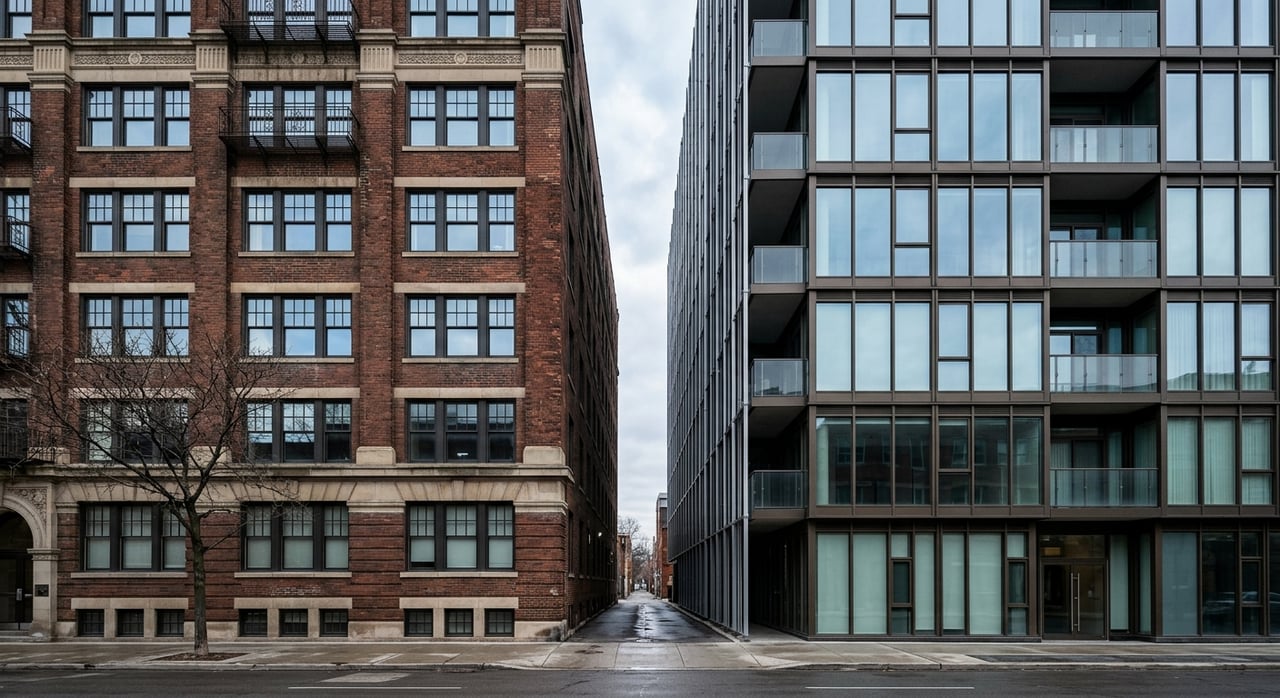
At a high level, vintage condos often attract buyers who value character, varied layouts, and architectural detail. New-construction condos often appeal to buyers who want a more turnkey feel, modern finishes, and a layout that matches current living patterns.
Still, those broad categories only get you so far. In Lakeview, the better question is not which style is better in theory. It is which unit, in which building, fits your routine, budget, and long-term plans.
Compare How the Unit Lives
Look Beyond Style
A condo can photograph beautifully and still be wrong for your daily life. When you compare a vintage unit to a newer one, focus on floor plan, storage, window placement, and finish level before you get too attached to the design style.
Lakeview’s age mix means buyers often cross-shop older buildings with more individualized layouts against newer buildings with more standardized interiors. That does not mean every vintage condo is quirky or every new condo is predictable, but it is a useful starting point when you tour.
Check Functional Updates
Finishes matter, but system-level work matters more. A polished kitchen or fresh paint job may look great, but you should also ask what has been updated behind the walls.
When comparing options, look for clarity around items such as:
- Plumbing updates
- Electrical work
- Window replacements
- HVAC improvements
- Prior renovation scope
A building’s age alone does not tell the full story. A well-maintained vintage condo can compare very favorably to newer inventory if the important systems have been addressed thoughtfully.
Sound Depends on Construction Details
Do Not Assume Old or New Is Quieter
One of the most common questions buyers ask is whether vintage or new-construction condos are quieter. The most accurate answer is that sound performance depends on how the building was built and how the unit was altered over time.
Research from the National Research Council Canada shows that sound transmission loss is influenced by factors like mass, stiffness, air space, sound-absorbing material, mechanical coupling between layers, and flanking paths. In plain terms, that means wall and floor assembly matter more than the simple label of vintage or new.
Ask Better Questions About Noise
If sound control is important to you, ask specific questions during your search and due diligence. General assumptions can be misleading.
Useful questions include:
- How are the walls and floors assembled?
- Is there acoustic underlayment under hard-surface flooring?
- Were flooring changes approved by the association?
- Have prior remodels changed walls or floor assemblies?
This is especially relevant in Illinois because resale disclosures require a statement that improvements or alterations made by the prior owner are believed to comply with the condominium instruments. If a unit has had flooring or wall changes, those details are worth reviewing carefully.
Outdoor Space Needs a Closer Look
Confirm What You Actually Own
Outdoor space can be a major decision point in Lakeview. With easy access to the lakefront and the Lakefront Trail, some buyers are happy to rely on the neighborhood’s outdoor amenities, while others strongly prefer a private balcony, terrace, or patio.
The key is to confirm the legal status of that outdoor space. Under Illinois condominium law, outdoor areas may be part of the unit, a limited common element, or a shared common element, and those categories can carry different rights and maintenance responsibilities.
Why This Matters in Practice
A balcony or roof deck should not be treated as just a visual bonus. You want to know whether your right to use that space is clearly established and who is responsible for upkeep.
If outdoor space is high on your list, make sure you verify:
- Whether the space is private, limited common, or shared
- Whether the use rights are documented in the condominium instruments
- Whether maintenance costs fall on the unit owner or the association
That clarity can make a big difference in both your ownership experience and future resale conversations.
Monthly Assessments Tell Only Part of the Story
Lower Fees Are Not Always Better
It is easy to compare condos by monthly assessment and stop there. That can lead to the wrong conclusion.
Illinois condominium law requires budgets adopted on or after July 1, 1990 to provide reasonable reserves for capital expenditures and deferred maintenance. Boards are directed to consider factors such as repair and replacement cost, useful life, expected investment return, any professional reserve study, the financial impact on owners, the effect on market value, and the association’s ability to obtain financing or refinancing.
Read the Financial Picture, Not Just the Number
For you as a buyer, that means the monthly assessment should be viewed as part of a bigger funding strategy. A lower fee in a vintage building does not automatically mean lower ownership costs, and a higher fee in a newer building does not automatically mean poor efficiency.
Instead, compare:
- Current monthly assessment
- Reserve funding level
- Anticipated capital expenditures in the current or next two fiscal years
- Any history of reserve waivers
- Any separate or special assessments
- Pending suits or judgments noted in disclosures
- Insurance coverage included in the resale documents
Illinois resale disclosures are designed to surface these issues. If an association has waived reserve funding where permitted by its condominium instruments, that waiver must be disclosed in the financial statements and in bold print in the resale response to a prospective purchaser.
Resale Potential Comes Down to Durability
Future Buyers Will Review the Same Things
In a market like Lakeview, resale potential is not just about whether your condo is vintage or new. Future buyers will likely study the same core factors you should be studying now.
Redfin’s data showing 534 homes sold in May 2026 and a median of 38 days on market suggests that well-positioned properties can move quickly. But speed and price still depend on how the unit and building stand up to buyer scrutiny.
What Typically Supports Resale
The most durable resale signals tend to be:
- A functional floor plan
- Clear documentation
- Healthy reserves and transparent finances
- Building condition that supports long-term upkeep
- Updates that go beyond surface-level cosmetics
- Outdoor space with clearly defined rights and responsibilities
If a condo checks those boxes, it is usually in a stronger position when you decide to sell later.
A Practical Lakeview Condo Framework
If you are weighing a vintage condo against new construction in Lakeview, use this simple framework to stay focused.
1. Review the Finishes
Separate cosmetic updates from meaningful system work. New countertops and lighting are nice, but plumbing, electrical, windows, and HVAC often tell you more about long-term value.
2. Probe the Sound Profile
Ask how walls and floors are assembled and whether any flooring work was approved. Sound depends on construction details and past alterations, not just the building’s age.
3. Verify Outdoor Space
Confirm whether the balcony, terrace, patio, or roof deck is part of the unit, a limited common element, or a shared amenity. Then confirm who is responsible for maintenance.
4. Study Monthly Costs in Context
Look beyond the current assessment. Reserve funding, upcoming capital work, and disclosure history often tell you more than the headline monthly number.
Which One Is Better for You?
If you love architectural detail and are comfortable doing a little more homework on building condition and past updates, a vintage condo may be the right fit. If you prefer a more turnkey experience and modern finishes, new construction may feel more aligned with your goals.
In Lakeview, there is no one-size-fits-all winner. The better choice is usually the building with stronger documentation, sounder financial planning, and a unit that fits how you actually live.
When you want a second set of eyes on floor plans, building finances, or Lakeview condo trade-offs, Niko Apostal can help you compare the details that matter and move forward with clarity.
FAQs
Is a vintage condo or new-construction condo better in Lakeview?
- The better option depends on the specific building, the unit’s layout and updates, the association’s finances, and your preference for character versus turnkey convenience.
Are vintage condos quieter than new-construction condos in Lakeview?
- Not necessarily. Sound performance depends on wall and floor assemblies, sound-absorbing materials, and whether prior remodels changed those assemblies.
Do new-construction condos in Lakeview usually have better outdoor space?
- Not always. You should verify whether a balcony, terrace, patio, or roof deck is part of the unit, a limited common element, or a shared amenity, and confirm who maintains it.
Do vintage condos in Lakeview have lower monthly assessments?
- Some do, but a lower assessment does not automatically mean lower ownership cost. Reserve funding, upcoming capital projects, and any waiver history matter just as much.
What should buyers review before buying a Lakeview condo?
- Focus on system-level updates, sound-related construction details, the legal status of outdoor space, monthly assessments, reserve funding, and the resale disclosure package.
Which Lakeview condos tend to resell more easily?
- Condos with usable floor plans, clear documentation, healthy reserves, and well-supported building condition tend to be easier for future buyers to evaluate and can be better positioned for resale.