Choosing between a condo or a house in Lincoln Park can feel like a fork in the road. You may want the space and privacy of a single-family home, but the convenience and security of a luxury condo also sound appealing. You’re not alone. This guide will help you weigh lifestyle, costs, amenities, and resale so you can buy with confidence in one of Chicago’s most sought-after neighborhoods. Let’s dive in.
Lincoln Park snapshot
Lincoln Park sits on Chicago’s near north side with a rare blend of lakefront access, parks, dining, and shopping. You’ll find historic greystones and townhomes on tree-lined streets next to boutique condo buildings and full-service luxury towers. Walkability is a major draw, with popular corridors along Armitage, Halsted, Clark, and North Avenue, plus CTA Red, Brown, and Purple Line access near Fullerton and several bus routes.
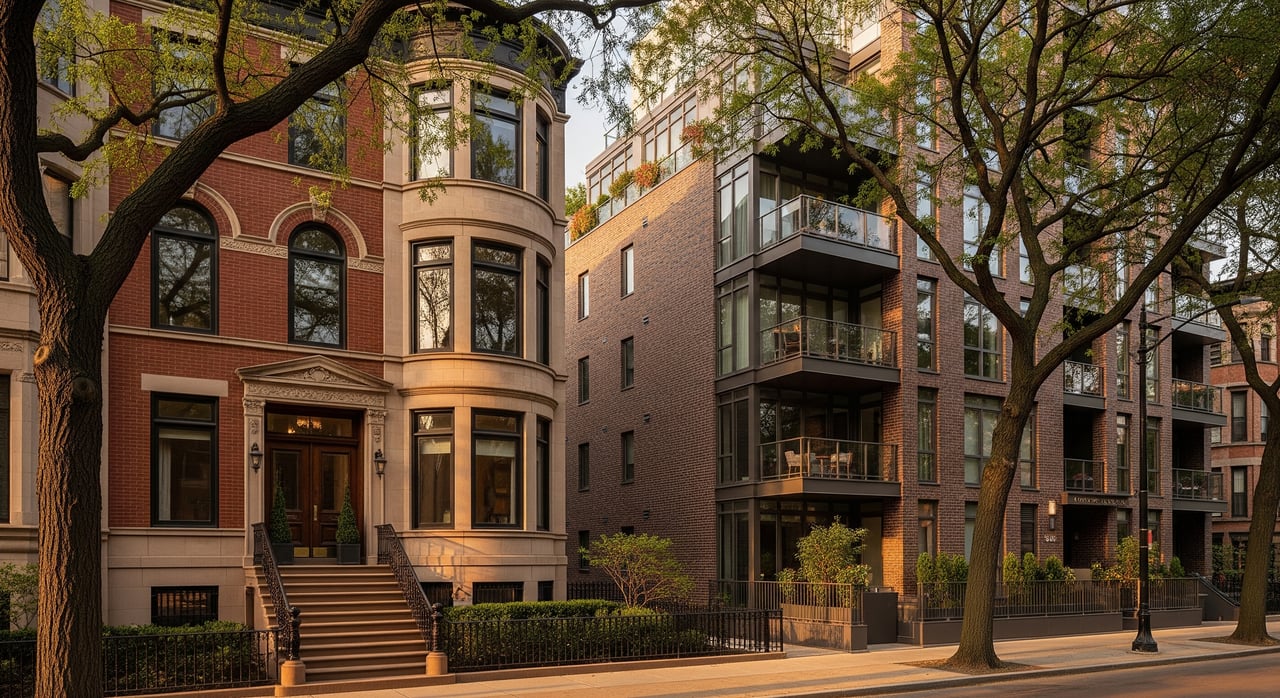
Housing options range from vintage masonry homes with updated interiors to newer infill single-family rebuilds, as well as mid-rise conversions and high-amenity condo towers. Because single-family lots are finite here, houses often sit in a limited-supply segment, while the condo market offers a wider spread of price points and amenities.
Quick decision framework
If you prioritize private outdoor space, full control over renovations, and a private garage, a single-family home may suit you best. If you want a lock-and-leave lifestyle with concierge services, robust amenities, and predictable monthly maintenance, a luxury condo could be the better fit. In Lincoln Park, both options can perform well when aligned with your lifestyle, budget, and long-term plans.
Lifestyle and space
Single-family houses
- Advantages: private yards or terraces, multiple levels for separation of space, and flexible floor plans that can evolve with your needs.
- You often get a private garage, generous storage, and the ability to reconfigure interiors more freely.
- Tradeoff: fewer building services. You manage your own maintenance and do not usually have on-site amenities.
Luxury condominiums
- Advantages: a doorman or concierge, integrated security, and in-building amenities such as gyms, pools, resident lounges, and roof decks.
- The lock-and-leave ease appeals to frequent travelers and second-home buyers.
- Tradeoff: outdoor space is typically limited to balconies or shared terraces, and layout changes must fit the building’s rules and structure.
Cost and maintenance
Houses: variable costs
You carry responsibility for the roof, exterior, foundation, systems, landscaping, and snow removal. Year-to-year costs can fluctuate. One major repair, like a roof or sewer issue, can be significant. You’ll also manage insurance and utilities directly, and you’ll likely hire contractors for ongoing upkeep.
Property taxes in Cook County apply to both houses and condos, but single-family homes with substantial improvements may have higher tax bills. Plan for tax appeals cycles and factor insurance differences into your budget.
Condos: dues and risks
Condo dues cover building-level maintenance, management, common areas, and sometimes certain utilities. The predictability can be helpful, especially in full-service buildings with professional management and healthy reserves.
The key risk is special assessments when large projects arise and reserves fall short. Well-managed luxury buildings tend to maintain stronger reserves, but you should still review budgets, reserve studies, meeting minutes, and recent assessment history.
Amenities and services
Luxury condo buildings in or near Lincoln Park often include 24-hour door staff, fitness centers, pools or spas, landscaped rooftops, package rooms, business areas, pet amenities, and valet or on-site parking. These features can replace the need for a private gym, yard upkeep, or off-site services.
Houses rely on what you build and maintain yourself. Some townhouse communities offer limited shared amenities, but they rarely match the scale of large condo towers.
Privacy and governance
Single-family homes offer more control over renovations, exterior choices, and use of property, subject to zoning and any historic district rules. Detached homes also provide more privacy, while rowhomes and townhomes might share walls.
Condo living comes with bylaws, building standards, and house rules that govern pets, rentals, alterations, and move-in procedures. High-end buildings often deliver better sound insulation, but shared walls and floors still require attention to noise.
Parking and transit
Many Lincoln Park houses include private garages or rear-alley parking, which is valuable given neighborhood density. For condos, deeded parking is often an additional cost. Guest parking can be limited and may require valet. Street parking is regulated by zones and enforcement, so confirm local permit rules and any restrictions.
Transit access is a strength for both property types. Proximity to the CTA and bus routes can enhance daily convenience, while the neighborhood’s walkability supports a car-light lifestyle for many residents.
Financing and insurance
For single-family homes, conventional mortgages are typically straightforward, focusing on the property and the borrower. Homeowners insurance covers the structure and contents.
For condos, lenders also review the building’s financial health, reserves, owner-occupancy ratio, litigation, and delinquency rates. Some lenders may require higher down payments or specific project approvals, which can influence timing and terms. Condo buyers usually carry an HO6 policy for interior finishes and personal property, while the master policy covers the building shell and common areas. Confirm what the master policy includes and understand deductibles.
Closing costs apply in both cases, including City and County transfer taxes and recording fees. Also consider federal tax law limits on state and local tax deductions. In high-tax areas, those limits can affect net ownership costs, especially at higher price points.
Resale and liquidity
Single-family homes benefit from scarcity in Lincoln Park, which can support premiums and long-term appreciation. Owning the land, adding space, or executing a high-quality renovation can be a value driver.
Condo resale performance often hinges on the building’s reputation, management quality, reserves, and amenities. Well-located, well-managed luxury buildings can achieve strong price-per-square-foot and steady buyer demand. The condo pool is larger, which can help attract investors and pied-à-terre buyers when conditions are favorable.
Practical due diligence
For condominiums
- Review the declaration, bylaws, house rules, and past 12 to 24 months of board minutes.
- Study current budgets, reserve studies, and insurance master policies, including deductibles and any owner responsibility for claims.
- Check pending or recent special assessments, owner-occupancy and rental percentages, delinquency rates, litigation, and management details.
- Verify deeded parking and storage rights and any short-term rental restrictions.
- Ask your lender about project approval and any condo-loan requirements.
For single-family homes
- Schedule a comprehensive home inspection, plus specialized checks as needed: roof, foundation, HVAC, sewer scope, masonry, windows, and pest.
- Confirm alley access, easements, and the absence of city liens or violations.
- Verify lot lines, potential for expansion, and whether the property sits in a landmarked area that could limit exterior changes.
For both
- Review recent comparable sales by submarket within Lincoln Park to calibrate value.
- Check property tax history and appeal potential.
- Research neighborhood plans or developments that could affect future views, traffic, or noise.
- If schools matter to you, verify attendance areas and review available options. Chicago Public School performance varies by catchment, and private schools are nearby; confirm fit based on your needs.
Decision checklist
Use this quick map to align your priorities with the right property type.
Choose a single-family home if you value:
- Private outdoor space and a garden.
- Full control over interior and exterior renovations.
- A private garage and abundant storage.
- More separation from neighbors and long-term lot ownership.
Choose a luxury condo if you value:
- On-site amenities and services like concierge, gym, pool, and roof deck.
- Predictable monthly building maintenance via HOA dues.
- A lock-and-leave lifestyle with integrated security and valet options.
- Lower day-to-day maintenance responsibilities.
Next steps in Lincoln Park
Buying in Lincoln Park rewards clarity about lifestyle and budget. Start by confirming how you want to live day to day, then match that to cost structure and resale goals. From there, line up lender guidance, review due diligence documents or inspection plans, and study recent neighborhood comps by property type and micro-location.
If you want a clear, local roadmap to the right choice, connect with a team that lives this market every day. Our collaborative approach pairs neighborhood insight with valuation, staging, marketing strategy, mortgage tools, and vetted vendor referrals to streamline your move. When you are ready to compare options, request a tailored walkthrough with Niko Apostal.
FAQs
What appreciates better in Lincoln Park, a condo or a house?
- Single-family homes often benefit from limited land supply, while luxury condos can also perform well when the building is well-managed, well-located, and amenity-rich.
How do monthly costs compare between condos and houses?
- Condo dues bundle building maintenance and services into a predictable fee, while houses avoid dues but have variable maintenance that can spike with major repairs.
Are condo special assessments a big risk in Lincoln Park?
- The risk depends on building reserves and management; review budgets, reserve studies, minutes, and recent assessments to gauge the likelihood of extra charges.
Are condo loans harder to secure than house loans?
- Lenders also underwrite the condo project’s health, reserves, and ratios; speak with your lender early to confirm eligibility and required documentation.
Which suits families better in Lincoln Park, condos or houses?
- Houses often provide more private outdoor space and flexible layouts; condos offer convenience and amenities but may have rules and space limits to weigh.
How do renovations differ between condos and houses?
- Houses allow more renovation freedom subject to city permits and any landmark rules; condos require board approvals and follow building standards and work hours.